Robotic Surgery
Personalized Knee Replacement — A New Technological Revolution
It is a new technological revolution that offers a solution to the problem of correctly positioning a knee replacement. The reason is the personalized knee replacement–robotic technique, which has now begun to be applied in Cyprus by Dr. Neophytou. This new technique offers significant advantages and minimizes the percentage of patients who were not satisfied with the outcome of conventional total knee replacement.
Specifically:
Significantly smaller surgical incision compared to traditional total knee replacement
Shorter surgical procedure
Avoidance of intramedullary rods, resulting in less blood loss and a lower risk of embolism
Short hospital stay (2–3 days)
Fast and easy recovery
Perfect alignment in the positioning of the prosthesis, which has a direct impact on the patient’s clinical recovery and the longevity of the prosthesis
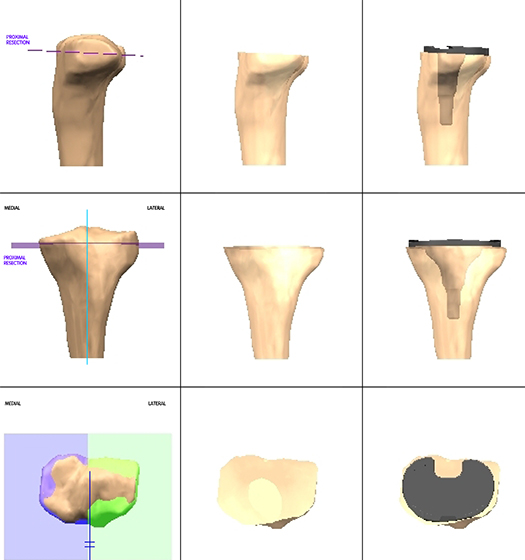
According to Dr. Dimos Neophytou, total knee replacement aims to replace the degenerated and worn joint surfaces with a prosthesis. To achieve this, the surgeon must align the cutting guides of the femur and tibia so that the bone cuts are made along the correct axis and at the correct angle in all planes.
“During conventional total knee replacement, the surgeon attempts to achieve this using extramedullary or intramedullary rods, with angle calculations based on statistical studies, while the rotation of the prosthesis is determined ‘by eye’ or through palpation of anatomical structures, the reliability of which depends on the surgeon. It is, therefore, subjective. The slightest deviation in these calculations can lead to malalignment of the prosthesis.”
Perhaps, as the doctor points out, this is the reason why approximately 20% of patients who have undergone total knee replacement are not satisfied with the outcome.
The personalized knee replacement–robotic technique comes precisely to address the problem of correctly positioning the knee replacement. As the doctor explains, before surgery, the patient undergoes radiological assessment—including an MRI and a full-leg X-ray—during which images are obtained of the hip, knee, and ankle joint of the affected limb.
The images are then sent to the company manufacturing the implants, where they are analyzed using specialized software. Through precise analysis of the anatomical parameters (axes, angles, etc.) by computer, the company’s engineer and the surgeon work together to develop the final surgical plan.
Once the surgeon approves the final plan, a three-dimensional model of the patient’s knee and specialized cutting guides are manufactured. These instruments are unique to the individual patient.
In this way, subjective calculations are minimized and the accuracy of the surgical procedure is maximized.
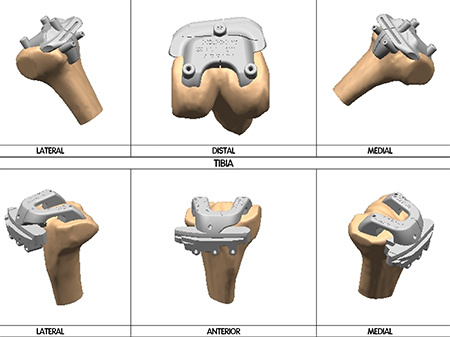
Personalized knee arthroplasty - robotic technique, is the most modern method of joint replacement and radical treatment of osteoarthritis. It greatly improves the quality of life, with better success rates and a significantly longer lifespan of the prosthesis.